Rotate Rings
- 4.8
- Rating
- 10.00M
- Installs
- Free
- Price

 Analysis by App-foxy
My first impression of Rotate Rings is that it wants to make concentration feel gentle rather than demanding. This is a puzzle game built around turning rings, and that simple action gives it a clear identity: instead of asking me to race through a busy screen, it invites me to pause, inspect a pattern, and work out how the pieces might fit. I find that approach appealing when I have a few quiet minutes and want something more involving than passive scrolling.
That calm premise is also a useful way to judge the game. A ring-rotation puzzle can be satisfying when each move helps me understand the arrangement, but repetitive if the challenge does not develop enough to hold my attention. Rotate Rings is at its best when I treat it as a small focus exercise, not as a sprawling adventure or a competitive test. If that is what you want from a puzzle, its modest idea has real everyday appeal.
A visual language built around turning and fitting
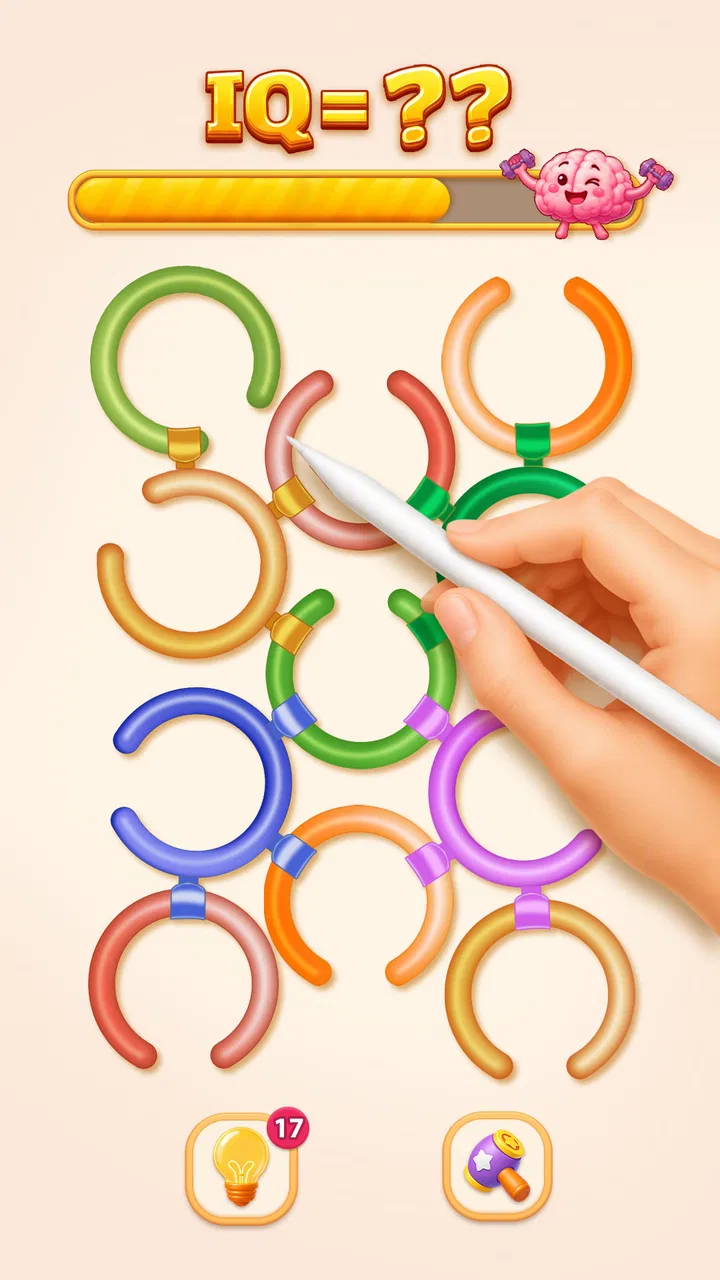
The central image of the game is easy to grasp: rings are the pieces I manipulate, and rotation is the action I return to. That gives the puzzles a visual logic that feels more direct than many grid-based brain teasers. I can look at the arrangement, consider how a turn might change it, and test that thought through a tactile gesture. The game’s identity comes from that repeated relationship between seeing and turning, rather than from a complicated set of rules.
You May Also Like

 AccuWeather: Weather Radar
AccuWeather Review: A Quick, Clear Forecast for Everyday Decisions
For everyday plans, the best forecast is the one you can understand quickly. AccuWeather makes rain timing, radar, and local conditions easy to act on, with a few trade-offs.

 Hill Climb Racing
Why Hill Climb Racing Still Turns Crashes Into One More Run
A tiny car, a bumpy hill and one more upgrade: Hill Climb Racing keeps resurfacing because its simple chaos makes every near-miss feel personal.

 AliExpress - Shopping App
AliExpress Makes Global Shopping Feel Personal, but Shoppers Bear the Risk
AliExpress turns a global marketplace into a pocket-sized discovery engine. Its reach is useful, its shopping loop compelling, and its trade-offs easy to miss.

 Lords Mobile: Kingdom Wars
Lords Mobile Is a Kingdom-Building Routine, Not a Quick Match
A case-by-case verdict on the building, battles, device demands, and social commitments that make Lords Mobile rewarding for some players and exhausting for others.

 PDF Scanner app - TapScanner
TapScanner Makes Paperwork Easier to Capture, Check, and Share
TapScanner makes scanning with a phone feel less like a rescue operation and more like a dependable step in getting work done. Its capture tools are useful, though not flawless.

 Block Blast!
 Shows How Much a Puzzle Game Can Leave Out
A quiet grid game shows why puzzle players increasingly value instant clarity, repeatable skill and low-pressure play—and where the genre still needs to catch up.
More From Our News Desk
View All News


This kind of presentation suits short sessions because it keeps the mental task in view. I do not need to remember a long chain of instructions before I can engage with a puzzle. The trade-off is that a compact visual vocabulary places pressure on the puzzles themselves: if the underlying relationships stop feeling fresh, the same rings can begin to look like variations on one exercise. Players who enjoy noticing spatial patterns are likely to get more from the format than people who need a constant stream of new settings or characters.
I also like the way a ring puzzle encourages me to think in cycles rather than straight lines. In a conventional tile puzzle, I often focus on moving one piece toward a target. Here, a turn can affect how several parts relate to one another, so it is worth scanning the whole arrangement before acting. A practical habit is to identify one visible mismatch, then ask which rotation could improve it without disrupting the pieces that already seem aligned. That small pause can be more useful than repeatedly turning rings at random.
The setting stays close to the puzzle rather than competing with it. That is a sensible choice for a game whose main pleasure is watching an arrangement change under my input. I would not come here expecting a rich narrative world; the attraction is the focused visual problem. For players who prefer their puzzles framed by a detailed story or a strong cast, that restraint may feel too spare. For me, it makes the game easier to pick up when I want my attention on the challenge itself.
Quiet play has a rhythm of its own
The game’s relaxing pitch makes its pacing important. Ring rotation naturally supports a slower loop: inspect, choose a direction, turn, and check whether the result makes sense. That rhythm gives me room to reconsider a move instead of treating every second as a countdown. It is a good fit for a short break between tasks, or for winding down when I do not want the intensity of a reflex game.
There is a useful distinction between “relaxing” and “effortless,” though. A puzzle can be calm while still asking me to concentrate, and I would approach this one with that expectation. If I am tired enough that I do not want to interpret a pattern at all, even a gentle logic challenge may feel like work. I get the best experience when I have enough attention to think, but not so much time that I need a large, involved game session.
Because the game is described as playable offline, it can suit moments when a connection is inconvenient, such as a commute or a wait in a place with unreliable service. I would still choose a puzzle session deliberately: a ring arrangement is easier to reason through when I can give it a little uninterrupted attention. A practical tip is to stop after a puzzle rather than leaving the game open as a constant distraction. That keeps the calm, focused quality intact and makes each return feel like a fresh small task.
Sound is part of the mood a game like this needs to support, but I would not choose it on the assumption that audio is the main event. The core appeal is visual and tactile: the rings, their relationships, and the consequence of a turn. If you usually play with your phone muted, the basic puzzle concept still makes sense. If you rely on audio cues to understand actions, it is worth approaching the game as a visual puzzle first rather than expecting sound to carry the experience.
Why the mechanics work—and where they may not
As a puzzle game, Rotate Rings keeps its mechanical promise unusually easy to understand: the rings are there to be turned, and the challenge is to reason about the arrangement. That makes it a friendly option for someone who wants to start thinking quickly instead of learning a large control scheme. The store summary also frames it as a way to train the brain offline, which fits the kind of deliberate attention that rotation puzzles invite.
The most useful way to play is to make each move informative. Before turning a ring, I would note what I expect to change; after the turn, I would compare the result with that expectation. If it helps, mentally label the parts of the arrangement that already look right and avoid undoing them casually. This turns a sequence of taps or gestures into a small process of testing ideas. It is a more reliable approach than trying every direction without a plan, especially when multiple pieces seem connected.
That same simplicity can become the game’s main limitation. Players looking for elaborate mechanics, a long narrative campaign, head-to-head competition, or a large collection of different puzzle types may prefer a broader puzzle app. This one’s appeal rests on the ring-rotation idea, so the question is not whether it has something for every taste, but whether that specific mental motion is enjoyable to you. If spatial reasoning feels satisfying, the focused design is a strength; if you quickly tire of repeating one kind of interaction, it may be a reason to skip it.
Compared with the usual alternatives in the puzzle category, the game seems better suited to calm, self-paced thought than to speed or score chasing. A word puzzle asks me to search for language, while a match-style game often emphasizes quick recognition and chains of actions. Ring rotation asks for a different kind of attention: tracking how a turn changes a spatial arrangement. That makes it a good change of pace for someone who has played plenty of word or tile puzzles, but not necessarily a replacement for them.
For an everyday example, I can imagine opening it while waiting for an appointment. I might solve one puzzle, put the phone away when my name is called, then come back later without needing to remember a story or a complicated progression. The offline angle makes that kind of use especially practical. On the other hand, if I have only a few seconds and need something that delivers instant stimulation, a fast arcade game or a very simple word puzzle would be a better fit.
Who should try it, and what to expect
The game is free to download, with in-app purchases listed from ninety-nine cents to nine dollars and ninety-nine cents per item. I would treat that as a reason to check the purchase details in the app store before spending, rather than assuming that every part of the experience is included at no cost. Its free entry point makes it easy to see whether the ring-based puzzles suit your way of thinking, while the optional purchase range is relevant if you prefer to avoid in-app spending altogether.
It is rated for Everyone, which makes the basic audience broad: adults who want a small logic exercise, younger players drawn to visual puzzles, and families looking for a quiet game to take turns discussing. I would still let a child explore the purchase controls with an adult if avoiding accidental spending matters. The developer is Nebula Studio, and the game has an average rating of 4.8 from around 262,000 ratings, with about 2,300 written reviews. It has passed 10 million installs, a sign that the simple premise has reached a substantial audience, though popularity alone cannot tell you whether its particular puzzle style will click for you.
The current version is 1.1.6, and the game was released on July 31, 2026. It requires Android 7.1 or later. Those details are worth checking against your device before installing, especially if you use an older phone. I would also make the decision based on the kind of focus you want: this is for a quiet puzzle break, not for someone seeking a large world, expressive characters, or constant novelty.
My main recommendation is to give it a try if you enjoy spatial problems and want a game that can be approached at your own pace. Go in expecting a focused rotation mechanic rather than a broad puzzle collection, and use deliberate moves instead of spinning pieces until something happens. If you prefer a narrative campaign, high-speed challenges, or a changing variety of puzzle formats, another game will likely hold your interest longer.
Overall, Rotate Rings has a coherent mood because its visual idea, measured pacing, and puzzle-first focus point in the same direction. I like it as a low-pressure way to put my attention on one small problem, especially when offline access is useful. Its narrow concept is also a real boundary, not something I would pretend suits everyone. If turning a pattern until its relationships make sense sounds calming to you, this is an easy game to consider; if that repeated act sounds monotonous, trust that instinct and choose a puzzle with a different rhythm.
FAQs for Rotate Rings
01What is Rotate Rings and how do you play it?
Rotate Rings is a casual puzzle game built around turning circular rings to line up their openings and guide a ball or other moving piece toward its destination. The central idea is easy to understand, but each puzzle can require several rotations and a little planning. Controls and objectives may vary by version, so check the instructions shown in the game before starting.
02Is Rotate Rings easy for beginners to learn?
The basic interaction in Rotate Rings is generally straightforward: rotate the rings, study how their gaps align, and work out a route through the puzzle. Early stages can help you get familiar with the controls, while later challenges may require more careful sequencing. It is suitable for players looking for a simple pick-up-and-play puzzle, though individual difficulty can depend on the level design and app version.
03Does Rotate Rings require an internet connection?
Whether Rotate Rings works offline can depend on the particular edition and its features. Core puzzles may be playable without a connection in some versions, while advertisements, optional rewards, updates, or other online services may need internet access. If offline play matters to you, check the store listing and test a level with your device in airplane mode before relying on the game during travel.
04Is Rotate Rings free to download, and does it include ads or in-app purchases?
The price and monetization of Rotate Rings can vary between its Android and iOS listings, as well as by region or release. Some versions may be free to install and supported by advertising, with optional purchases or paid features; others may use a different model. Review the current store page for pricing, in-app purchase details, and age or privacy disclosures before downloading.
05What should I check before downloading Rotate Rings on Android or iOS?
Before installing Rotate Rings, confirm that the store listing is the version you intend to get and that it supports your device and operating system. Check the developer name, recent update date, user reviews, permissions, privacy information, and any listed ads or purchases. These details can change over time, so the official Google Play or Apple App Store page is the best source for current compatibility and download information.
Pros
- Simple controls make the rings easy to rotate and understand.
- Short levels suit quick play sessions.
- The puzzle format encourages careful planning.
- A lightweight concept is accessible to casual players.
- Restarting a level makes it easy to try another solution.
Cons
- Later puzzles may feel repetitive.
- Some solutions can be difficult to spot.
- The game offers limited variety in its core mechanics.
- Progress may feel slow for players seeking a challenge.
- Ads may interrupt play depending on the version.

Rotate Rings
Gallery